
The Refill Revolution: How Refillable Packaging Is Disrupting Sustainability

Key Takeaways
- Refillable packaging has moved past a beauty-industry niche into a real operating model across categories.
- The strongest refill systems separate the primary container from the refill format entirely.
- Refills cost less to produce, which makes the first container purchase easier to justify.
- Design for refill doesn't need to match the primary product's aesthetic - it needs to work.
- There's no fixed playbook yet. That's an opening for differentiation, not a reason to wait.
A refillable packaging system separates a product's primary container from its refill format, so the container is purchased once and the refill is replenished repeatedly in different, often simpler, packaging. It cuts material use per unit sold and lowers the cost of every purchase after the first one. Done well, it becomes a genuine operating model - not a sustainability add-on bolted onto an existing product line.
Sustainability now shapes buying decisions in a way it didn't a decade ago. One data point makes this concrete: 76% of children in the US and 70% in the UK already say being environmentally friendly matters to their lifestyle. That's not a future consumer segment. That's the buyer packaging teams are designing for right now.
Refill systems are one of the clearest responses to that shift, and one of the most operationally serious. Beauty and personal care - long considered one of the most wasteful categories in packaging - is where refill adoption has moved fastest. The pattern is now spreading well beyond it.
Why Refill Is a System, Not a Feature
The strongest refill programs share one design choice: they treat the container and the refill as two separate products, not one product with a second fill. Cleaning brand Puracy's CANcel system is a clean example. The dispenser is plastic, built to last for years. The refills ship in aluminum cans - the same format used for soft drinks and beer. The consumer pops the can open, snaps it to the pump, and twists it into place. The process takes seconds, and the aluminum itself is recyclable.
That separation matters. It means the refill can be optimised purely for cost, shipping efficiency, and material reduction, without being constrained by whatever design choices went into the original container.
Three Refill System Models, Compared
Not every refill system works the same way. The whitepaper's examples cluster into three distinct approaches, each with different design and cost implications.
| Model | How it works | Example |
|---|---|---|
| Material-substitution refill | The refill uses an entirely different, lower-impact material than the original container - often bamboo pulp or plant-based alternatives instead of plastic | Bamboo pulp refill systems, used by The Body Shop and others, biodegrade easily and require minimal processing to produce |
| Format-substitution refill | The refill ships in a completely different container format than the product it fills - cans instead of bottles, pouches instead of jars | Puracy's CANcel system ships liquid refills in recyclable aluminum cans rather than plastic bottles |
| Aesthetic-divergent refill | The permanent container keeps the brand's signature design language; the refill looks and feels completely different, since it's rarely seen by the end customer | L'Occitane's refills for shower gel, shampoos, and liquid soap use simple packaging, while the reusable bottle keeps the brand's distinct aesthetic |
The design insight most teams miss: a refill doesn't need to look like the product it fills. The container is what the customer interacts with and judges the brand by. The refill just needs to work, ship efficiently, and cost less to produce. Treating both as the same design problem usually makes the refill more expensive than it needs to be.
What Refill Systems Look Like in Practice
KanKan: refill as the primary format, not an afterthought
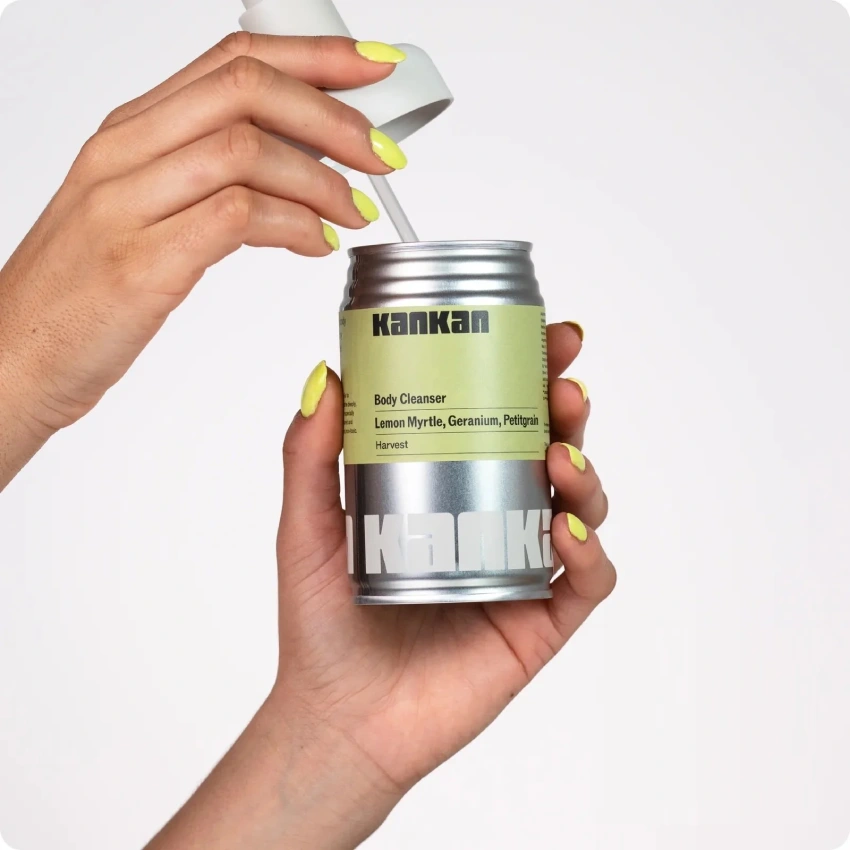
KanKan's refillable aluminum can redefines eco-friendly body care packaging.
KanKan's body care line builds the can itself into the brand identity, rather than hiding the refill mechanism behind a more conventional bottle. The pump attaches directly to the can, and the whole system reads as intentionally designed, not retrofitted.
Plant-based refills replacing plastic entirely
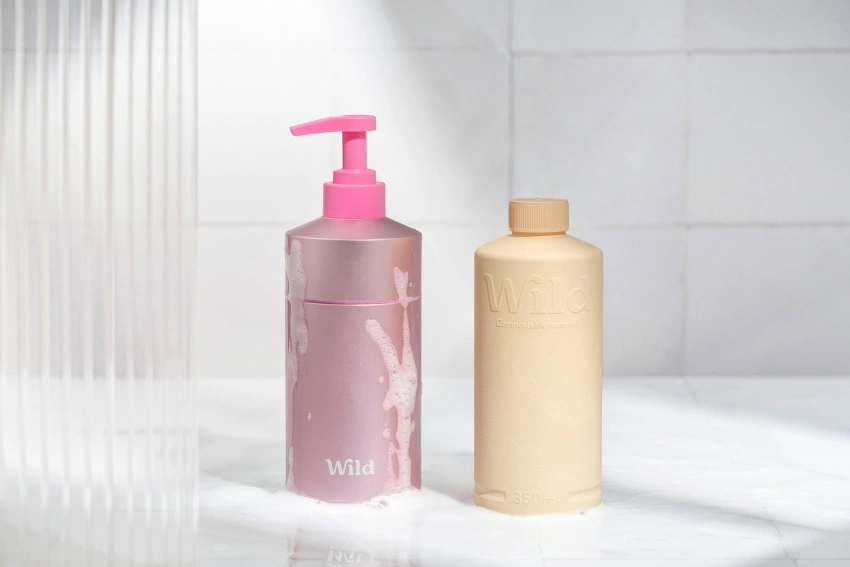
A plastic pump bottle paired with a plant-based, compostable refill format.
Some systems go further than swapping materials in the same container shape. The refill itself is built from an entirely different, compostable material - removing plastic from the equation for every purchase after the first.
Berlin Packaging: refill in a premium fragrance format
Berlin Packaging's refillable bottle design for the luxury fragrance market.
Refill doesn't have to mean utilitarian. This format shows refillability built into a genuinely premium fragrance bottle - proof that easy recycling and refill mechanics don't have to compromise a luxury shelf presence.
Caudalie: refillable jars for skincare
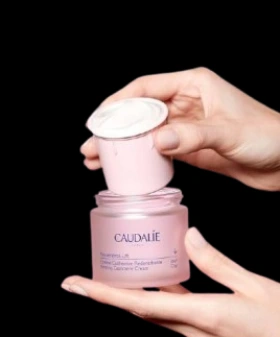
Caudalie's refillable jar system for skincare, combining elegance with sustainability.
Caudalie's refillable jar keeps the outer container as the permanent, branded piece, while the inner cartridge is what actually gets replaced. It's a format increasingly common in skincare, where the container itself often carries most of the perceived value.
Where This Connects to Design-to-Value
Refill systems are, at their core, a material reduction and redesign exercise applied to packaging that gets used repeatedly rather than once. The same discipline that identifies where a single-use format can shed material without losing function applies just as directly to deciding what a refill actually needs to include - and what it doesn't.
That's also why refill isn't a fad to wait out. It's a genuine reduction in packaging volume per unit of product sold, which is exactly the kind of change that compounds over time rather than producing a one-time win.
There's No Fixed Playbook Yet - That's the Opportunity
Materials and design for refill packaging don't follow an established standard the way conventional packaging formats do. New precedents are still being set. For a brand willing to move now, that's an opening, not an obstacle - the categories where refill is still uncommon are exactly where a well-designed system stands out rather than blending into an already-crowded field.
This connects directly to the broader sustainable packaging consulting practice question of where sustainability investment actually pays off commercially, not just reputationally - refill is one of the clearer answers.
Frequently Asked Questions
What is a refillable packaging system?
A system that separates a product's primary, reusable container from its refill format. The container is purchased once; the refill is replenished repeatedly, usually in simpler or lower-cost packaging than the original container.
Why are brands adopting refillable packaging now?
Consumer demand for sustainable products is rising sharply, especially among younger buyers. Refill systems also reduce material use and refill production costs, making them a genuine cost lever, not only a sustainability one.
Does a refill need to look like the original product packaging?
No. The strongest refill systems let the primary container carry the brand's design identity, while the refill is optimised purely for cost, shipping, and material efficiency, since customers rarely interact with the refill's packaging directly.
Which industries are adopting refillable packaging fastest?
Beauty and personal care have led adoption, partly because the category has historically generated significant packaging waste. Cleaning products and skincare are following closely, with format-substitution and material-substitution refill models both in active use.


