That breadth matters more than most brands realise. A structural decision made early in the development cycle, a wall thickness, a material choice, a closure mechanism, will determine product protection, material cost, freight efficiency, and consumer experience downstream.
Catching a design flaw in the prototyping stage costs a fraction of what it costs to fix after tooling has been cut. Packaging innovation is what ensures those decisions are made with ambition as well as rigour: not just asking 'will this work?' but 'can we make it better, lighter, faster, and more sustainable at the same time?'
Packfora's model operates across two integrated tracks. The Innovation track covers ideation, consumer insight, prototyping, and concept development, the creative engine. The Engineering track covers technical design, simulation, testing, and commercialisation, the rigour that makes creative solutions real. Together, they cover the full journey from a brief on a page to a product on a shelf.
From Concept to Shelf: Packfora's Integrated Innovation and Engineering Model
Packfora's packaging innovation services are built around four connected pillars.
Packaging Innovation: It focuses on end-to-end product and packaging development, mock-ups, aesthetic and functional prototypes, pilot mould trials, and collaborative ideation through innovation fairs. This is where new formats, structures, and consumer experiences begin.
Packaging Engineering: It is all about 2D and 3D structural design, parametric CAD using DFM, DFA, and DFMEA methodologies, digital performance simulation, and manufacturing drawings ready for production. Packfora's engineering team integrates generative AI-enabled design tools and VR-based validation into this process, not as novelties, but as practical tools that compress iteration cycles and surface structural trade-offs faster than manual methods alone.
Transit and Distribution Modelling: It is about simulation and testing against ISTA scenarios and international standards, ensuring packaging performs not just on the shelf but through every stage of the supply chain.
Channel-Specific Solutions: It contains e-commerce packaging, D2C formats, and specialised structures for non-standard distribution environments. These connect naturally to packaging procurement strategy, where engineering decisions directly shape sourcing options and material costs.
Alongside these four pillars sits a capability that most packaging partners do not offer at all: Artwork Operations. This covers the full lifecycle of packaging artwork; from brief and design concept through version control, regulatory compliance review, approval workflows, and final print-ready file release. In regulated industries like pharma and food, artwork errors are not just delays, they can trigger compliance failures, product recalls, and brand damage. Packfora's packaging artwork management capability sits within specification management governance to ensure that brilliant design actually reaches the shelf exactly as intended.
Prototype Faster, Validate Earlier, Launch with Confidence
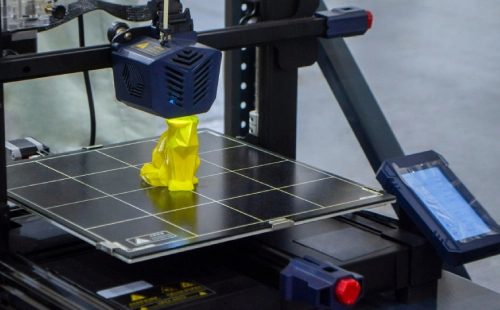
In traditional packaging development, prototyping arrives late. Physical samples take weeks to produce, design iterations are expensive once tooling is involved, and by the time a structural flaw surfaces in testing, the brief has already been locked. Packfora inverts this sequence. Digital simulation and in-house 3D printing for packaging compress the iteration cycle so that design issues are identified, and resolved before a single gram of production material is committed.
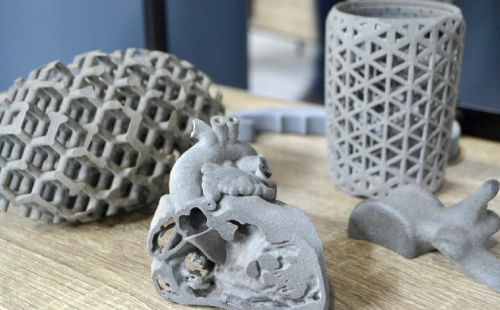
Packfora's packaging prototyping services include in-house 3D printing and mould development for rapid physical prototypes, aesthetic and functional prototype builds, and pilot mould trials that bridge the gap between design validation and production readiness.
The 'Rapid Prototyping, Real Results' case study is a direct example of this in practice, in-house 3D printing streamlined prototyping cycles and significantly reduced development lead times for a packaging brief that would previously have required multiple external sample rounds.
Digital simulation complements physical prototyping without replacing it. Performance optimisation modelling identifies structural weaknesses before physical builds are produced. VR-based design validation allows stakeholders to review and approve formats without waiting for physical samples, reducing sign-off time and the cost of late design changes.
Generative AI-enabled design tools add a further layer, allowing engineering teams to explore structural variations at speed and identify material optimisation opportunities that manual iteration would miss. The result is faster packaging validation testing that is also more targeted, physical testing is focused on the designs most likely to succeed, not every design iteration.
Built to Survive the Supply Chain: Transit Testing and Performance Validation
A packaging failure in transit is not just a quality issue. It is a brand problem, a customer experience problem, and a supply chain cost problem, damaged goods, customer complaints, reverse logistics, and write-offs. The only way to avoid it is to engineer packaging that has been systematically tested against the conditions it will actually face, not assumed to be adequate.
Packfora's transit packaging optimisation capability covers comprehensive distribution simulations and testing aligned with ISTA testing scenarios and international standards. ISTA - the International Safe Transit Association, provides the globally recognised framework for simulating distribution environments: drop tests, vibration, compression, and climate exposure across the range of conditions packaging will encounter between manufacture and end consumer. For enterprise buyers in pharma, electronics, and FMCG, naming ISTA compliance is table stakes. For Packfora, it is a delivered capability.
What the testing validates goes beyond whether packaging survives. It confirms structural integrity under distribution stress, identifies where packaging is over-engineered, carrying unnecessary material weight and cost, and where it is under-engineered and vulnerable.
Both are problems. The outcome of rigorous distribution packaging testing feeds directly back into structural design: informing material selection, wall thickness decisions, and closure mechanisms in a continuous loop. It also informs supply chain automation strategy, because packaging that performs consistently in transit is packaging that scales.
FAQs
How does rapid prototyping reduce packaging development time?
Rapid prototyping, through in-house 3D printing and digital simulation, compresses the design iteration cycle by catching structural issues before production tooling is involved. Design flaws identified at prototype stage cost a fraction of what late-stage fixes require. Packfora's Rapid Prototyping case study demonstrated how in-house 3D printing significantly reduced development lead times by eliminating the need for multiple external sample rounds.
What is artwork management in packaging?
Packaging artwork management is the end-to-end governance of packaging artwork from design brief through version control, regulatory compliance review, approval workflows, and print-ready file release. In regulated industries, such as pharma, food, FMCG- artwork errors can trigger compliance failures, product recalls, and supply delays. Effective artwork lifecycle management ensures that every packaging format reaches the shelf exactly as designed and approved.
What are ISTA testing standards in packaging?
ISTA, the International Safe Transit Association provides the globally recognised framework for testing packaging against the conditions it will face in distribution: drop tests, vibration, compression, and climate exposure scenarios. Testing against ISTA standards validates that packaging protects product integrity throughout the supply chain. Enterprise buyers in pharma, electronics, and FMCG commonly specify ISTA compliance as a requirement when evaluating packaging partners.
How does packaging engineering reduce costs?
Packaging engineering reduces costs through material right-sizing, lightweighting, structural optimisation, and early-stage testing. A structural decision made at the design stage- wall thickness, material grade, format dimensions, determines material cost, freight efficiency, and waste across the entire production run. Catching design inefficiencies in engineering and prototyping, rather than after commercialisation, prevents the compounding costs of late-stage redesign.
What is generative AI's role in packaging design?
Generative AI tools in packaging design accelerate structural exploration by generating multiple format and material variants, running performance simulation scenarios, and identifying optimisation opportunities faster than manual iteration. They allow engineering teams to evaluate more design options in less time, narrowing to the strongest candidates before physical prototyping begins. AI augments engineering expertise; it does not replace the structural judgement that experienced packaging engineers bring.