
R&D as a Service: Why Packaging Teams Are Outsourcing Execution to Protect Innovation
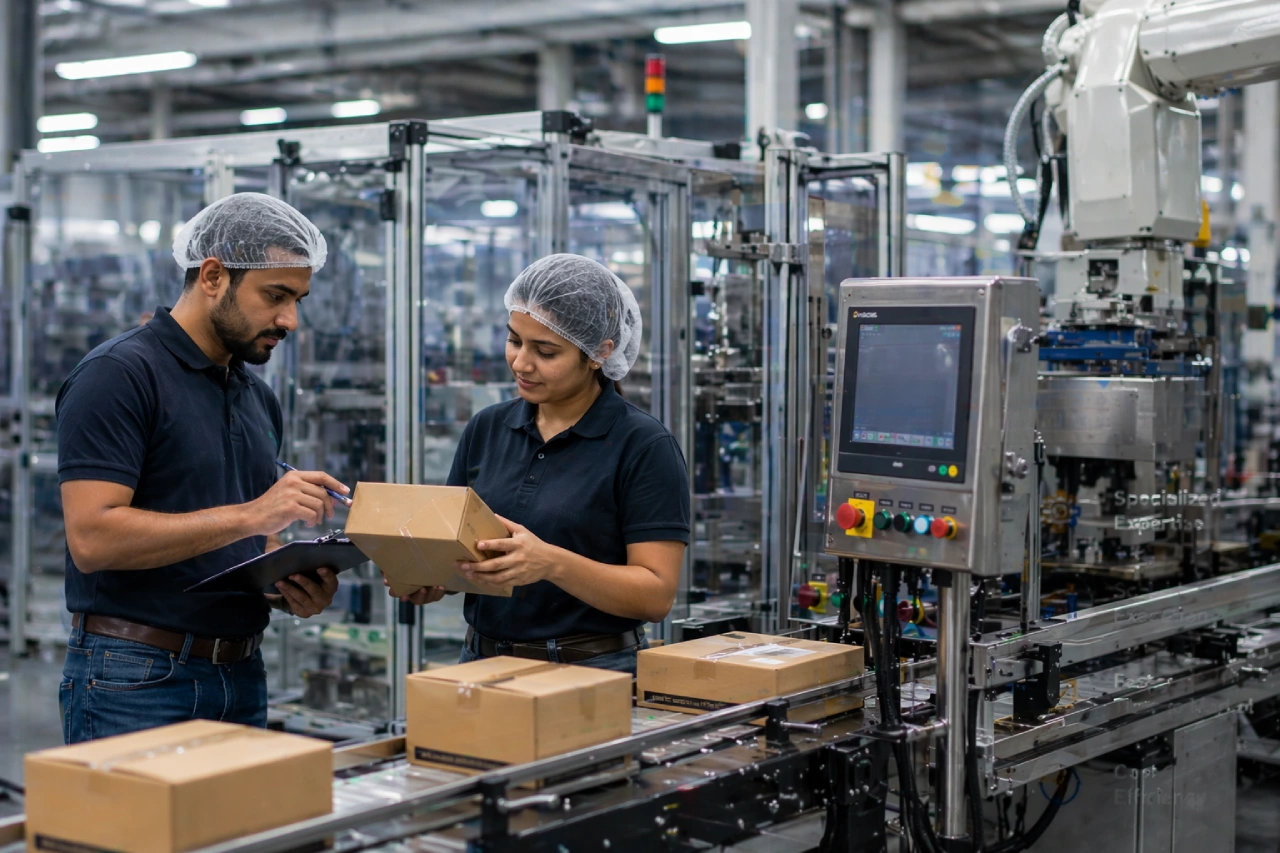
Take an honest look at how a packaging R&D team actually spends its week. Mould trials. Supplier validations. Line testing. Shelf-life assessments. Component qualification documents that need to be written, reviewed, and filed.
All of it is necessary. None of it is innovation.
This is the structural bandwidth problem in packaging R&D, and it does not get solved by adding more people to the same model. The teams that are compounding their innovation capacity are the ones that have separated execution from strategy, and built an external delivery layer to absorb the former.
That is exactly what packaging R&D as a service delivers. Here is how the model works, and why it is reshaping how the most capable packaging organisations think about scaling innovation.
When Execution Eats Your Innovation Capacity
Across the packaging ecosystem, three structural problems consistently drain R&D bandwidth before it reaches the work that actually moves the needle.
- Burdened buyers. Procurement teams are spending significant time managing mould trials, supplier validations, and line testing, tasks that are operationally necessary but pull focus from strategic sourcing, supplier partnership development, and the category-level thinking that procurement is actually for.
- Fragmented global execution. Global packaging programmes stall because R&D bandwidth is unevenly distributed across regions, standards vary, and access to specialist expertise is patchy. A programme that runs smoothly in one market can sit idle in another simply because the local team does not have capacity.
- Inconsistent assessment processes. Alternate supplier and material assessments are conducted differently across markets, different methodologies, different standards, different documentation. The result is non-uniform outcomes and slower decision cycles that create downstream risk in the supply chain.
Each of these problems compounds the others. The cumulative effect is an R&D function where most of the energy goes into keeping programmes moving rather than pushing them forward. Execution crowds out innovation, not because teams lack capability, but because the model does not protect their time for it.
What R&D as a Service Actually Means in Practice
R&D as a Service (RDaaS) in packaging is a delivery model in which an external specialist partner takes ownership of defined packaging R&D workstreams, freeing the internal team to focus on innovation, strategy, and decision-making rather than execution and administration.
Packfora's R&D as a Service model is built across five practical pillars:
- Faster R&D execution. Mould qualification, component validation, line trials, functional and transit testing, shelf-life assessments, and commercialisation readiness, all handled by the service layer.
- Standardised assessment frameworks. Unified methods for alternate supplier and material assessments across regions, eliminating the inconsistency that slows multi-market programmes.
- Hybrid delivery model. Local experts manage supplier coordination and on-site trials; offshore teams handle data analysis, test protocols, and documentation.
- Programme governance. Dedicated programme managers oversee progress through centralised dashboards, providing visibility and accountability across geographies.
- Flexible engagement. From project-based pilots to long-term retainers or FTE-based partnerships, matched to each client's R&D maturity and volume.
The outcome is a global, elastic R&D ecosystem that scales up or down with business demand, without requiring changes to permanent headcount.
The Hybrid Delivery Model, Local Presence, Global Consistency
The specific innovation in Packfora's R&D as a Service model is not simply offshoring R&D tasks. It is the deliberate split between what requires physical presence and what does not.
Purely offshore packaging R&D support fails for a straightforward reason: packaging involves physical materials, physical processes, and physical suppliers. Mould trials cannot be managed remotely. Line testing requires someone on site. Supplier relationships require face-to-face contact. These workstreams need local presence.
But a significant portion of R&D work, data analysis, test protocol writing, documentation, report generation, assessment frameworks, does not. Running these tasks offshore delivers cost efficiency without quality compromise.
The hybrid model assigns each workstream to the right delivery structure:
- On-site / local: supplier coordination, mould trials, line testing, physical validation, client-facing engagements.
- Offshore: data analysis, test protocols, technical documentation, assessment reporting, dashboard management.
This is also the structural logic behind Packfora's packaging innovation and engineering capability more broadly, local technical expertise where the work requires it, scalable capacity where it does not.
From Burdened Buyers to Strategic Procurement Partners
One of the most underappreciated benefits of R&DaaS is what it does for the packaging procurement function, not just for R&D.
When procurement teams spend their time managing mold trial schedules and chasing supplier validation documentation, the work they are actually hired to do suffers.
Strategic sourcing gets deprioritised. Supplier partnerships stay transactional rather than developing into genuine long-term arrangements. Category-level intelligence, the kind of market knowledge that drives better negotiation outcomes and smarter material decisions, never gets built because there is no time to build it.
R&D as a Service separates execution from strategy at the procurement level too. When technical execution workstreams move to the service layer, packaging procurement teams recover the bandwidth to do what genuinely creates value: supplier development, should cost modelling, strategic sourcing, and forward-looking market intelligence.
The model does not replace procurement capability. It protects it.
Flexible Engagement, From Pilot to Long-Term Partnership
One of the common concerns around outsourcing R&D execution is commitment risk, the fear of locking into a model that does not fit the business as it evolves. Packfora's engagement structures are built to remove that concern.
Three engagement models are available, matched to where a client's R&D programme currently sits:
- Project-based pilots. For teams exploring R&DaaS for the first time, a defined scope, a defined outcome, a low-commitment entry point to validate the model.
- Long-term retainers. For programmes with consistent R&D volume, ongoing capacity that flexes with demand without headcount changes.
- FTE-based partnerships. For clients who want dedicated embedded capacity, specialists are integrated into the client's programme with the accountability of an internal team member but the flexibility of an external model.
The commercial logic is consistent across all three: pay for output, not overhead. Scale with the programme, not against the org chart.
The Future of Packaging R&D Is Decentralised and Dynamically Resourced
The structural direction of packaging R&D is clear. Static R&D departments, fixed headcount, centralised capability, limited regional reach, are increasingly poorly matched to global programmes that require local agility, regional expertise, and the ability to scale quickly without long hiring cycles.
The model that replaces them is adaptive: decentralised delivery, data-driven governance, and dynamically resourced capability that scales with the programme rather than requiring the programme to scale with it.
Four characteristics define the R&D function that will perform best over the next decade:
- Local responsiveness, regional expertise where and when programmes need it.
- Global consistency, standardised frameworks that produce uniform outcomes across markets.
- Scalable capacity, elastic resource that flexes with demand rather than requiring permanent headcount decisions.
- Structured governance, centralised dashboards, dedicated programme management, and measurable ROI at every stage.
The bandwidth constraint is not easing. NPD pipelines are accelerating. Supplier landscapes are growing more complex. Regulatory requirements are expanding. The R&D teams that have decoupled execution from internal headcount are compounding innovation capacity while others are still managing trial logs.
Explore Packfora's R&D as a Service and Talent Flex capability to understand how the model works in practice, from project-based pilots through to fully embedded partnership models. Or review the case studies for delivery outcomes across FMCG, Pharma, and Foods.
Frequently Asked Questions: Packaging R&D as a Service
What is R&D as a Service in packaging?
R&D as a Service (RDaaS) in packaging is a delivery model in which an external specialist partner manages defined packaging R&D workstreams, including mould qualification, component validation, line trials, functional and transit testing, and shelf-life assessments, on behalf of an internal team. The model allows packaging organisations to scale R&D execution capacity without expanding permanent headcount, using a combination of local on-site expertise and offshore technical support delivered through structured programme governance.
What packaging R&D tasks can be outsourced?
The packaging R&D tasks most effectively outsourced through a service model include: mould qualification and tooling trials, component and material validation, line and transit testing, shelf-life and functional assessments, alternate supplier assessments, test protocol writing and documentation, and commercialisation readiness activities. Tasks requiring physical presence, on-site trials, supplier coordination, line testing, are managed by local experts. Tasks that do not require physical presence, data analysis, documentation, reporting, are handled efficiently by offshore specialists.
What is a hybrid R&D delivery model for packaging?
A hybrid R&D delivery model for packaging combines local expert presence for workstreams that require physical access, mould trials, line testing, supplier coordination, with offshore specialist teams for workstreams that do not, such as data analysis, test protocol development, documentation, and reporting. The hybrid structure delivers cost efficiency on tasks where remote delivery is effective, while maintaining quality and responsiveness on tasks where physical presence is genuinely required.
How does R&D outsourcing support packaging procurement teams?
R&D outsourcing supports packaging procurement teams by removing the technical execution tasks, mould trial management, supplier validation, qualification documentation, that consume procurement bandwidth without contributing to strategic sourcing or supplier development. When execution is handled by an external R&D service layer, procurement teams recover the capacity to focus on should cost modelling, supplier partnership development, strategic sourcing decisions, and market intelligence, the work that creates measurable commercial value.