
AI in Packaging Artwork Management: From Manual Bottleneck to Strategic Advantage
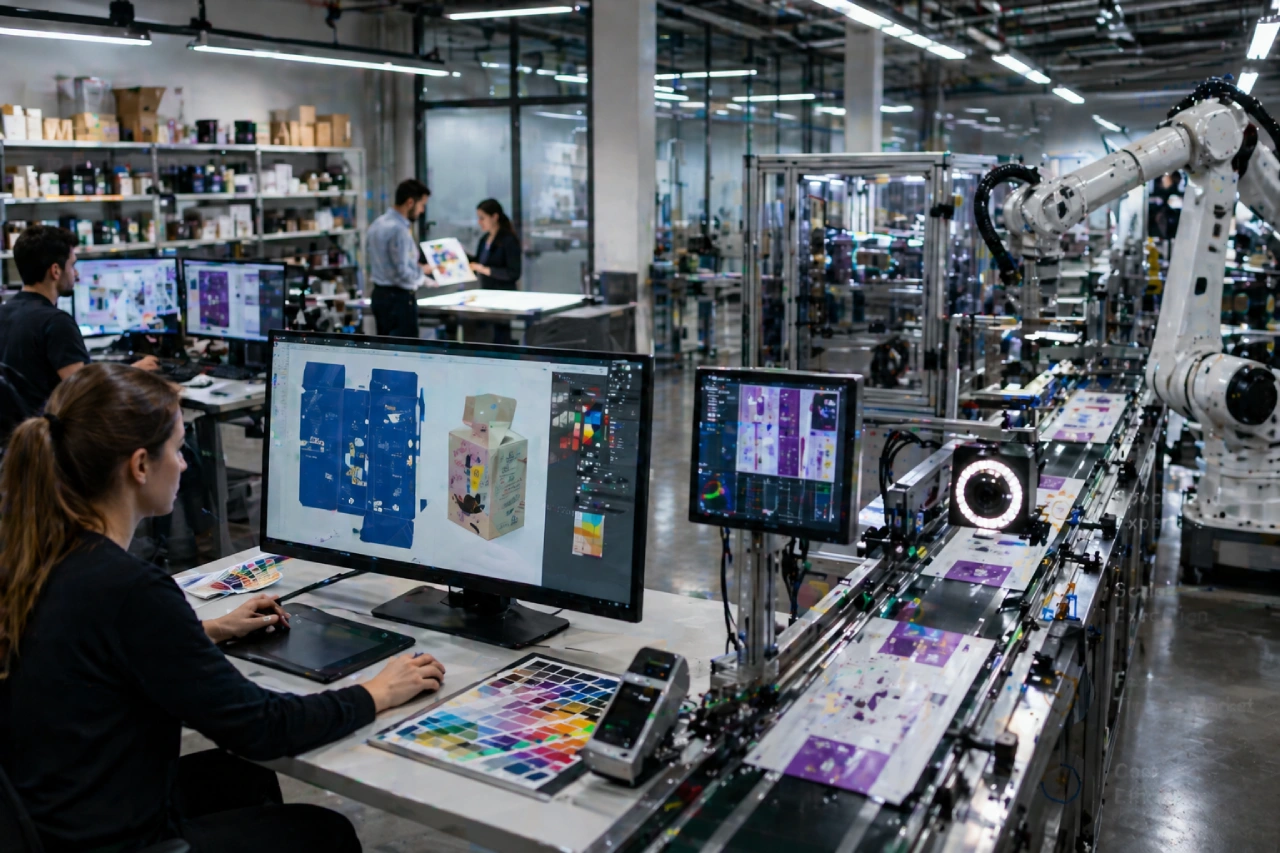
In CPG and Life Sciences, packaging artwork is the digital twin of the physical product. It carries brand identity, legal compliance, and sustainability credentials for every SKU on the shelf. Get it wrong and the consequences range from a reprint to a regulatory recall.
Yet for many global brands, the process managing it has not changed much in years. Email-based briefings. Manual spot checks. Subjective approval rounds. Version histories scattered across inboxes.
Manufacturing lines have embraced automation. Artwork management, by and large, has not. And with SKU counts growing, markets multiplying, and regulatory requirements tightening, the gap between what the process demands and what a manual system can reliably deliver is widening fast.
AI is not a future solution to this problem. It is the current one.
Three Ways the Traditional Artwork Process Is Failing
The problems with manual artwork management are not new. What has changed is the scale at which they compound.
- Linear scaling. Every new SKU, language version, or pack format requires proportional manual effort. As portfolios grow, more formats, more markets, more variants, the headcount required to keep pace grows with them. There is no efficiency gain built into the model.
- Human error risk. Manual proofreading of regulatory text, ingredient declarations, allergen statements, barcodes, and nutritional claims carries inherent error rates. In pharma and food, a minor inaccuracy on a label is not a design problem, it is a compliance event that can trigger a product recall.
- Slow time-to-market. Artwork approval cycles routinely span 4–8 weeks due to revision loops, email-based version control, and sequential approval chains that stall when a single stakeholder is unavailable. In high-velocity FMCG markets, weeks directly translate to lost revenue.
The pace of SKU proliferation, regulatory complexity, and multi-market portfolio management has outrun what linear, labour-heavy systems can reliably handle.
What AI Actually Does in a Packaging Artwork Workflow
AI in artwork management refers to the application of intelligent inspection, automation, and workflow tools to the packaging artwork process, replacing or augmenting manual tasks at each stage from briefing through to print-ready approval.
Three capabilities are driving the shift in packaging specification management and artwork operations:
- Automated compliance and proofreading. AI-powered inspection systems compare artwork against an approved master copy with near-total accuracy, checking regulatory text, ingredient lists, barcodes, and claims simultaneously and flagging deviations before the file enters the approval queue.
- Intelligent artwork adaptation. AI applies rule-based design logic to automate resizing and layout reflow across multiple SKUs, preserving brand consistency and regulatory spacing without manually rebuilding each variant.
- Speed-to-market acceleration. By reducing revision cycles, automating validation checks, and eliminating approval bottlenecks, AI-enabled workflows compress artwork timelines by 30–50%.
The Compliance Case, Why Human-Only Proofreading Is No Longer Enough
Manual proofreading has a ceiling. A trained artwork reviewer working at pace through a complex pharmaceutical label, regulatory text, active ingredients, dosage instructions, contraindications, barcode verification, will catch most errors. Not all of them.
In regulated industries, most is not sufficient. A single character error in a dosage instruction, an incorrect allergen declaration, or a barcode that does not match the specification is not a print correction, it is a potential market withdrawal.
AI-powered inspection does not replace human review. It runs before human review, catching errors at source so that by the time an artwork file enters the approval loop, it has already been validated against the master copy at a level of consistency no manual process can replicate.
This is what right-first-time accuracy means in practice, and it is the capability making AI in packaging artwork operations an operational necessity in pharma and food, not a performance enhancement.
Breaking the Linear Relationship Between SKU Growth and Artwork Cost
The commercial case for AI in artwork management is sharpest here. In a traditional process, portfolio complexity and labour cost move together. More SKUs means more manual adaptation work. More markets means more language variants. More format changes means more rebuilds.
AI breaks this relationship. Rule-based design logic automates adaptation across variants, maintaining brand consistency and regulatory spacing across formats, languages, and pack sizes without starting from scratch each time.
The practical outcomes:
- Significant reduction in artwork adaptation time per variant
- Improved consistency across global markets without proportional headcount increases
- A cost structure that scales with portfolio complexity without scaling linearly with it
Portfolio complexity and supply chain complexity are increasingly the same operational problem. Brands managing both through connected, automated systems compound efficiency gains that manual processes cannot match.
From Black Box to Glass Box, What a Connected Artwork Ecosystem Looks Like
Most artwork processes are black boxes. Briefs go in, files come out, and what happens in between, who reviewed what, which version is live, why a change was made three rounds ago, lives in email threads and shared drives that are neither searchable nor auditable.
A connected, AI-enabled artwork ecosystem is the opposite. Creative, legal, compliance, and production data flow through a single platform. Every change is logged. Every approval is traceable. Every version is controlled.
Organisations adopting these systems are reporting three consistent outcomes:
- Faster approval cycles, designs validated with data before entering the approval loop, eliminating revision churn.
- Right-first-time accuracy, errors caught at source, not discovered at print.
- Unified ecosystems, connected platforms replacing siloed tools, with data flowing transparently between creative, legal, and production teams.
This is what specification management looks like when designed for scale, not a document management system, but an intelligent governance layer across the entire packaging value chain.
Packaging Artwork as a Strategic Asset, Not an Admin Function
The reframe that AI makes possible is not just operational. It is strategic.
Packaging artwork is not a graphic file. It is an intelligent business asset carrying regulatory accountability, brand value, and commercial consequence simultaneously. Organisations that treat it as an admin function, managed through email, approved through consensus, controlled through manual version tracking, are accepting a level of risk and inefficiency that is no longer necessary.
The organisations building AI-enabled artwork workflows are gaining speed, compliance confidence, and portfolio scalability that manual processes structurally cannot deliver.
Is your artwork process a Black Box of manual emails, or a Glass Box of intelligent data?
The answer to that question increasingly determines whether a packaging operation can keep pace with the portfolio it is managing.
AI in artwork management is not about replacing the people who manage packaging artwork. It is about stabilising operations in an environment where complexity is compounding faster than manual systems can handle. The real shift is resilience, and resilience, in packaging operations, has become a measurable competitive advantage.
Explore Packfora's specification management and artwork operations capability to understand how AI-enabled governance is being applied across CPG and Pharma portfolios. Or review the case studies for delivery outcomes in practice.
Frequently Asked Questions: AI in Packaging Artwork Management
What is artwork management in packaging?
Artwork management in packaging is the process of developing, reviewing, approving, and controlling all packaging artwork, including labels, cartons, flexible films, and point-of-sale materials, from initial brief through to print-ready file. It encompasses brand design, regulatory text verification, version control, stakeholder approvals, and compliance sign-off. In CPG and Life Sciences, artwork management is a regulated function because packaging carries legal, safety, and compliance information that must be accurate across every SKU and every market.
How does AI improve packaging artwork approval?
AI improves packaging artwork approval by automating the validation steps that currently cause revision loops and delays. AI-powered inspection systems compare artwork against an approved master copy, checking regulatory text, ingredient declarations, barcodes, and brand elements simultaneously and flagging discrepancies before files enter the human approval queue. This reduces revision rounds, compresses approval timelines by 30-50%, and ensures that stakeholder review time is spent on genuine decisions rather than error-checking.
What is right-first-time artwork in packaging?
Right-first-time artwork in packaging refers to an artwork file that is accurate, compliant, and approved without requiring revision cycles. It is the outcome of a process where validation happens at source, before artwork enters the approval loop, rather than being discovered through iterative review rounds. AI-enabled inspection tools are the primary mechanism for achieving right-first-time accuracy at scale, catching errors in regulatory text, barcodes, and brand elements automatically and consistently across large SKU portfolios.
How does AI reduce packaging artwork errors?
AI reduces packaging artwork errors by applying machine-based inspection to compare artwork files against approved master copy at a speed and consistency that manual proofreading cannot match. AI checks regulatory text character by character, verifies barcode data, validates nutritional declarations and allergen statements, and flags any deviation from the approved specification, before the file reaches a human reviewer. This catches errors at source, significantly reducing the risk of compliance errors reaching print.


